Interview
Drew Tucker on Folklore, Family, and the Living Canvas
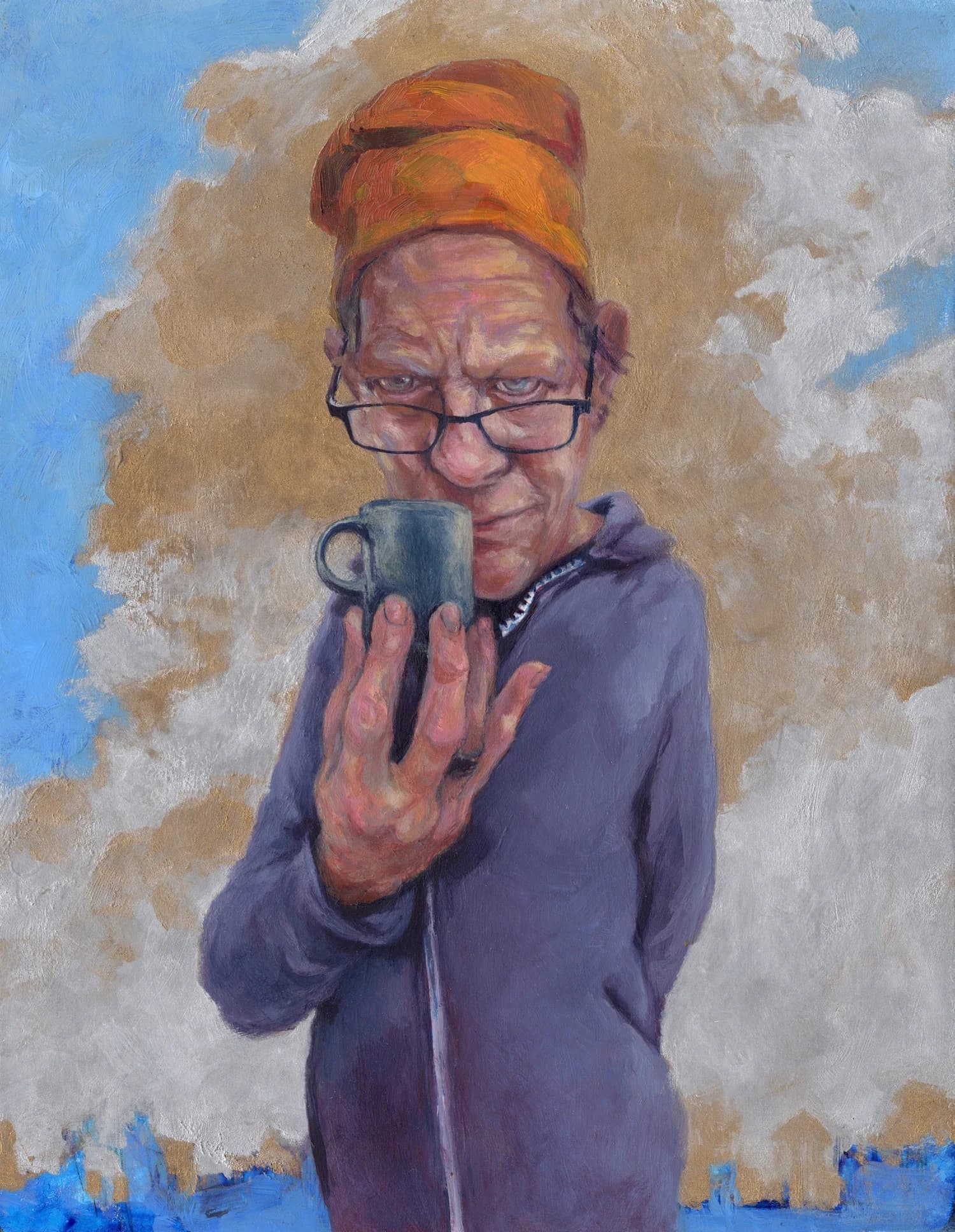
"The Artist with Teacup" self-portrait by Drew Tucker.
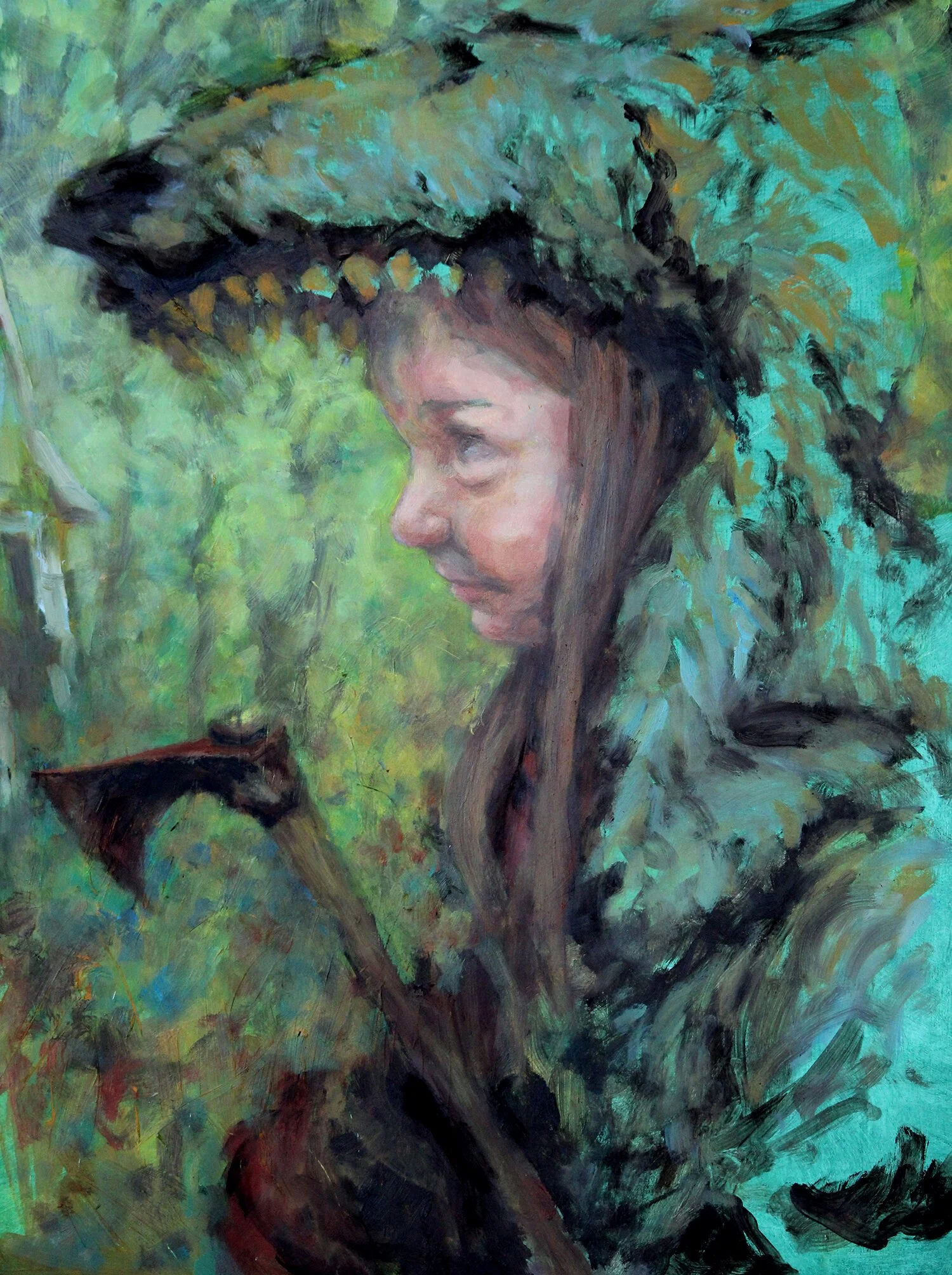
Behind Drew Tucker’s desk in Bangor, Maine, resting against the wall, is a canvas of a young child in an oversized, green wolf-hooded jacket.
"Oh that? That’s actually a painting of my kid," Tucker gestures. "We found this cool wolf jacket hood, and it ended up having this sort of Red Riding Hood vibe."
Whether conjuring mythical changelings or rendering foul horrors for Magic: The Gathering and Sorcery: Contested Realm, Tucker refuses to illustrate from a safe distance. Rather than leaning on anatomy books or stock poses, his canvases are populated entirely by his own life, his family, and his memories.
"Nobody should ever look at my phone!" he laughs. "It's filled with horrible photos. Bizarre, weird angles. Like the Dirium Fomorian painting. There are some strange dangling references in there."
Tucker gets up and starts rummaging through some stuff in another room, pointing out more details in his studio. Between the canvasses, easels and wooden cabinets, there are many objects to be found here that have made their ways into his paintings.
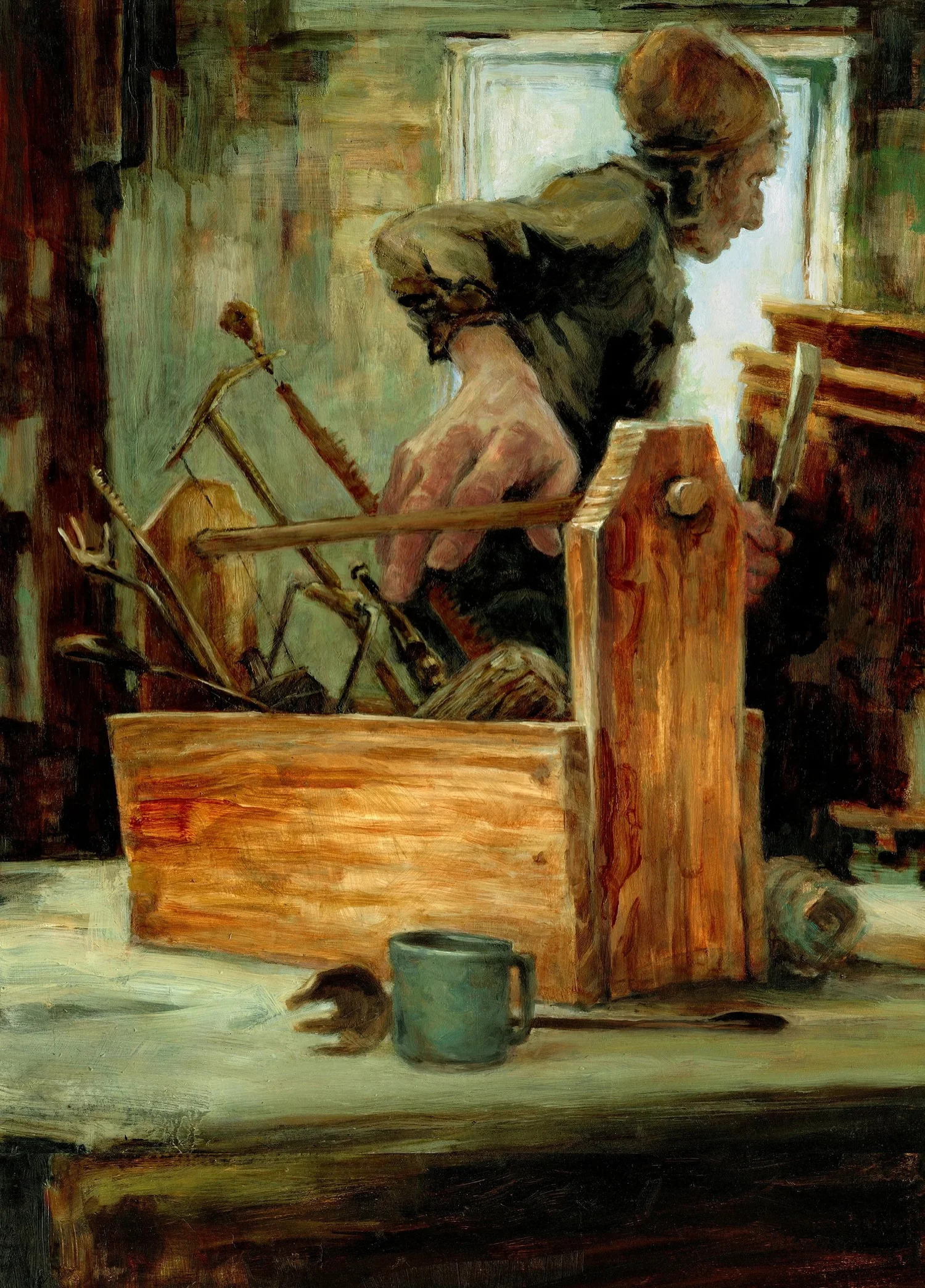
The iconic Toolbox from Sorcery is nestled somewhere in Tucker's woodworking space.
The painting centers a little wooden box with a handle. “The Toolbox is actually the toolbox my son Griffin made for me,” Tucker explains.
A carpenter chisels away at his masterpiece. Deep in focus.
A hand reaches back, feeling for the next hand saw, mortise chisel or perhaps the gimlet. “These are a lot of my wood tools that I got from my grandpa Avery.”
Wandering further in the workshop scene, on the table there’s also a little spork next to a blue cup, resting in the foreground. "I like sporks," Tucker says with a smirk. "I think spoon-forks are rather funny."
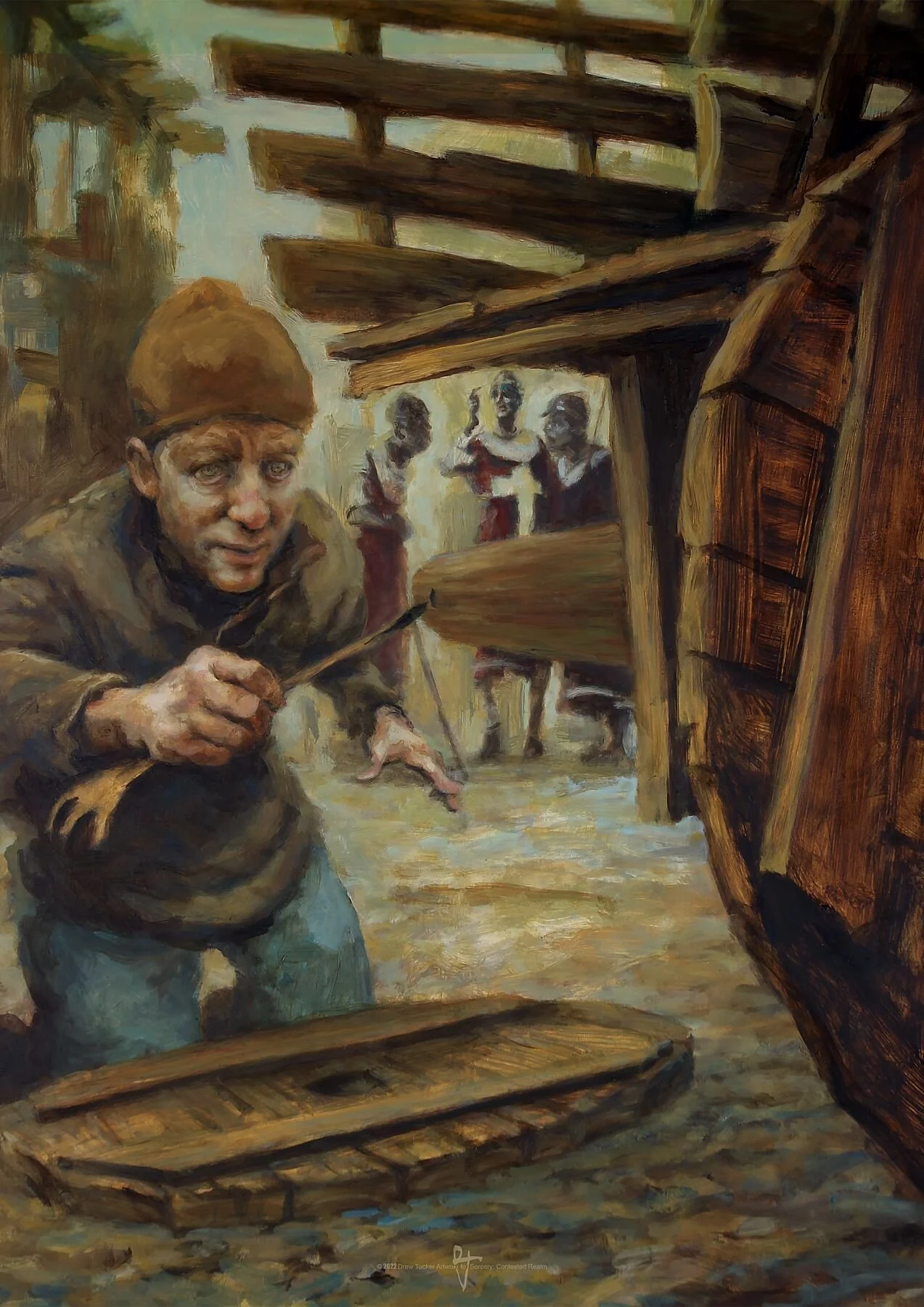
Another iconic piece from Sorcery is Common Sense, which centers on an oddly pragmatic mystery: a man hunches over a broken wagon wheel, puzzling out repairs while brandishing a spork as his tool of choice. In the background, armed guards look on uselessly, "as they tend to do," Tucker quips.
That blend of rustic grit and sly humor mirrors Tucker's own surroundings. He settled in Maine roughly three and a half years ago, having drifted across both American coasts before leaving Washington State.
For Tucker, perpetual movement is less about restlessness than perspective. "There's so much to see, and so many different ways of thinking," he reflects. "When you meet people from all walks of life, you realize how similar we fundamentally are, even with folks you disagree with. We all want the same basic things. It broadens your mindset and anchors you to a much wider world."
In Maine, just down the road from Stephen King’s house (though Tucker notes he has yet to spot him), he found an atmosphere that suits his temperament. The local philosophy is simple: "Be good to each other. Stay cool and get on with life, or take a hike."
Moving between handcraft in the workshop and hiking the pine forests, Tucker’s physical environment and his painted visions naturally bleed together.
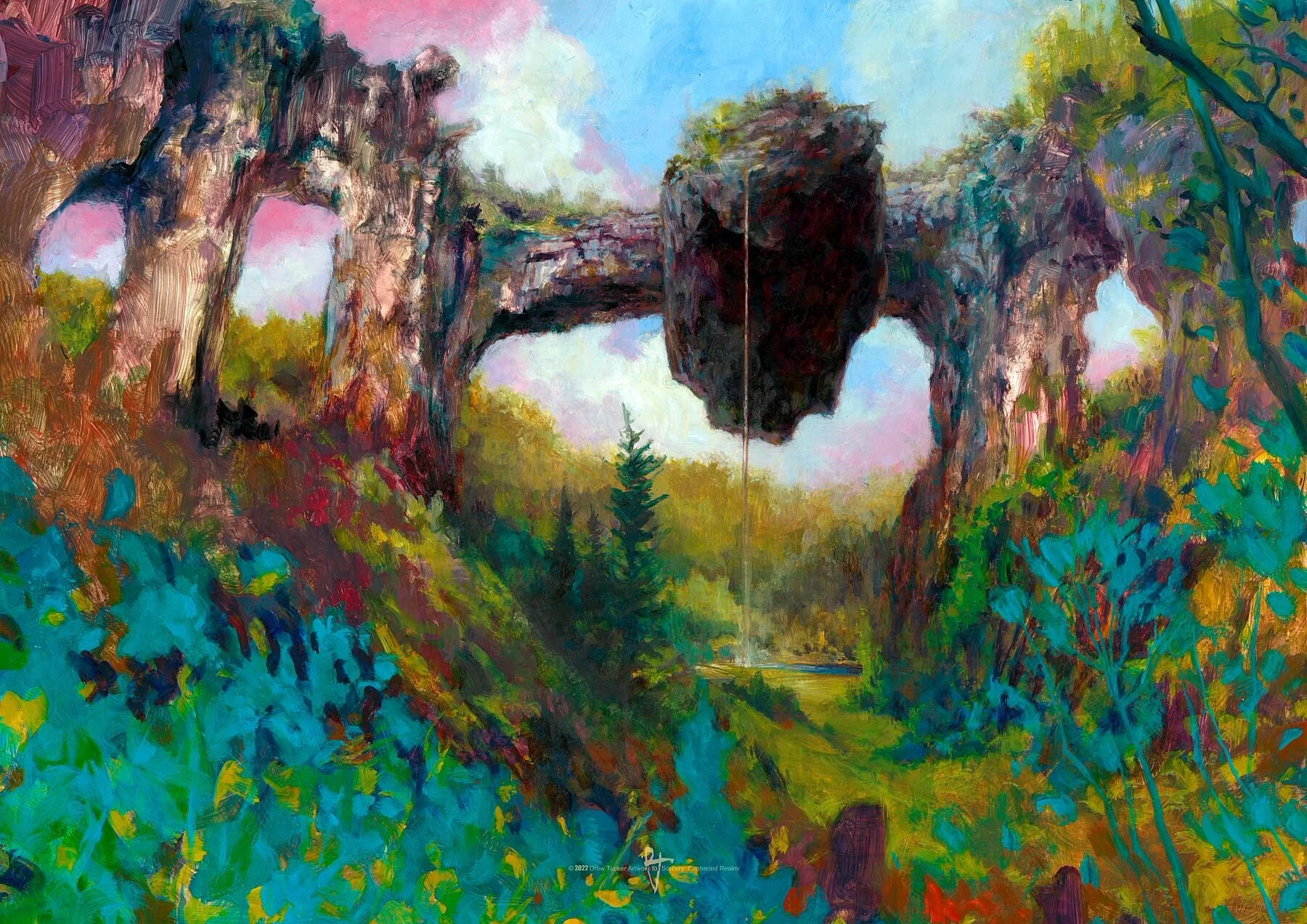
Tucker’s path into painting fantasy art was less a conscious vocational choice than an inevitability. "I don't think I had a choice. It's all I ever really did," he recalls, noting both his parents had an artistic streak but never pursued anything seriously. By age eight, he was selling handmade Christmas cards to grownups and dirty drawings to friends in the schoolyard for pocket change.
In the 1980s, during the height of the American "Satanic Panic," fantastical subjects were taboo in the Tucker household. But this only fueled his curiosity for the world of fantasy, myth and folklore.
"That stuff was forbidden to me," Tucker explains, noting his childhood household's heavy religious background.
"I had to play D&D in secret, and then go to church and listen to records played backwards to find Satan. I couldn't even watch Fantasia because of the Greek gods."
So naturally, being told not to do something made it all the more appealing to Tucker. "If you tell me not to do something, I'm probably gonna do it because then I bet it's interesting."
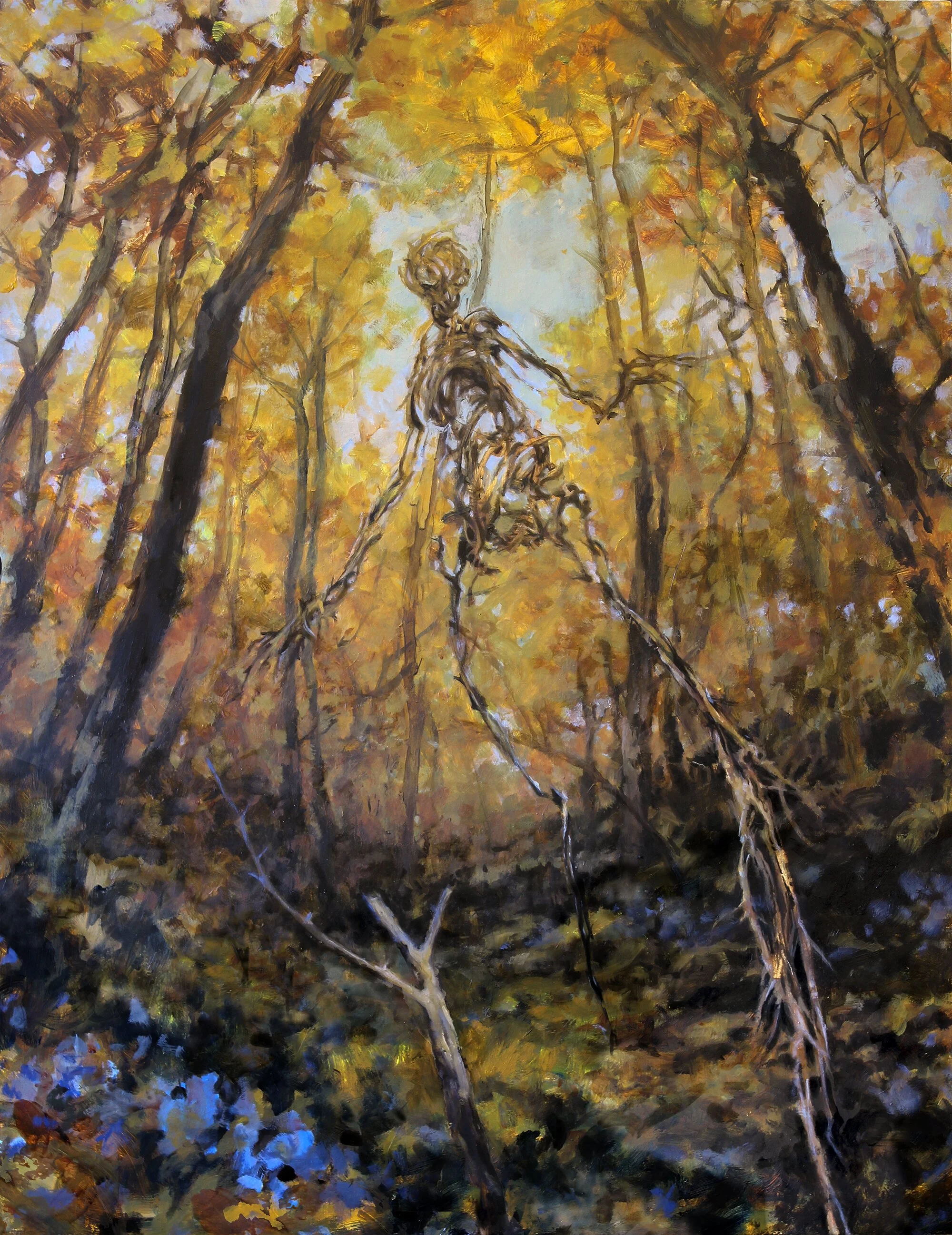
That pull towards folklore and forbidden ritual has never left him. When illustrating the Wicker Manikin for Sorcery, he dug up photographs taken thirty years earlier in college. He recalls how he and friends used to build puppets stuffed with autumn leaves to burn on Halloween night.
Art as magic
To hear Tucker describe his journey with art, painting isn't just an exercise in making pictures. It borders on the supernatural.
"Somewhere in a painting might be magic," he reflects. "Like a prayer or something."
He recalls an early drawing instructor offering the class a choice between two distinct paths: art as technique, or art as magic. "Everybody wanted technique," he recalls. "But the magic part stuck with me."
He points to an eerie episode from early in his career:
"In the nineties, I was doing art for a game called Anathema, based on the Salem Witch trials. One of the paintings was called Warts: a Salem man in a pilgrim mask holding up a foot covered in warts, with more all over his hands. Two days after finishing it, I broke out in warts everywhere I’d put them in the picture."
It is a classic example of "sympathetic magic": the belief that an image or effigy can physically alter reality through symbolic connection, much like a voodoo doll.
Whether coincidence or something stranger, the experience of having his own canvas answer back has stayed in the back of Tucker's mind ever since, even when joking with friends. He tells a story of how that lingering superstition forced him to make a phone call to a close friend before finishing his painting: Bitten.
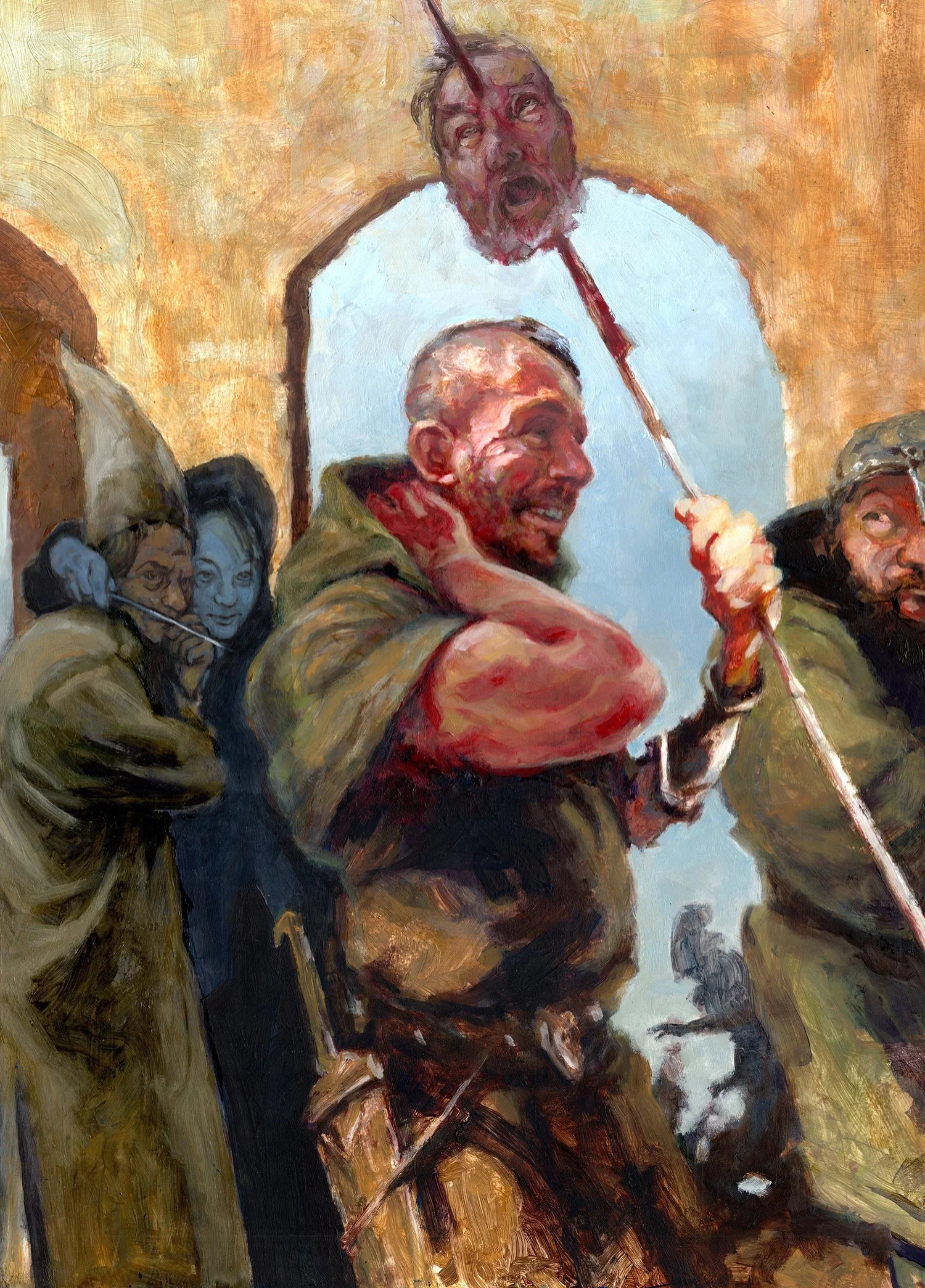
His piece Bitten was released by Sorcery in the Gothic set. It's an ideal example of how well Tucker manages to capture expression in his characters' faces. It also carries an interesting tale of friendship and permission.
An oblivious traveler, who's seemingly in the middle of sharing jokes with a friend, rubs at his neck…
A pair of shadowy bystanders look on, whispering in the dark while brandishing a suspiciously long needle. They are laughing too, though their amusement is far more sinister than their victim's.
Finally on the pike rests a head. It carries a terrified expression. "That’s Jeff Menges's head," Tucker admits proudly, referring to fellow fantasy artist and author. "He’s a really good friend of mine. I love the guy."
"I wanted to put him at the highest spot in the painting. But I also had to decapitate him," Tucker jokes affectionately. "I actually called and asked him first because I didn’t want any bad intentions attached to it."
"If there’s any voodoo going on, you can't just erase that [decapitation]."
Conjuring expression through constraints
Many of Tucker's paintings achieve mood through characters' facial expressions. These range from the pleasant chuckle of an oblivious victim marching through a crowded street (Bitten), to the scowling of Cave Trolls intensely chomping down some faeries for breakfast.
Dread, however, is possibly the emotion that's captured most brilliantly in Tucker's paintings. Noxious Corpse, Fey Changeling and Nightmare are only a few examples of this. Bulging white eyes, oversized noses and a frown are fitted around a slightly gaping mouth that reveals things resembling teeth.
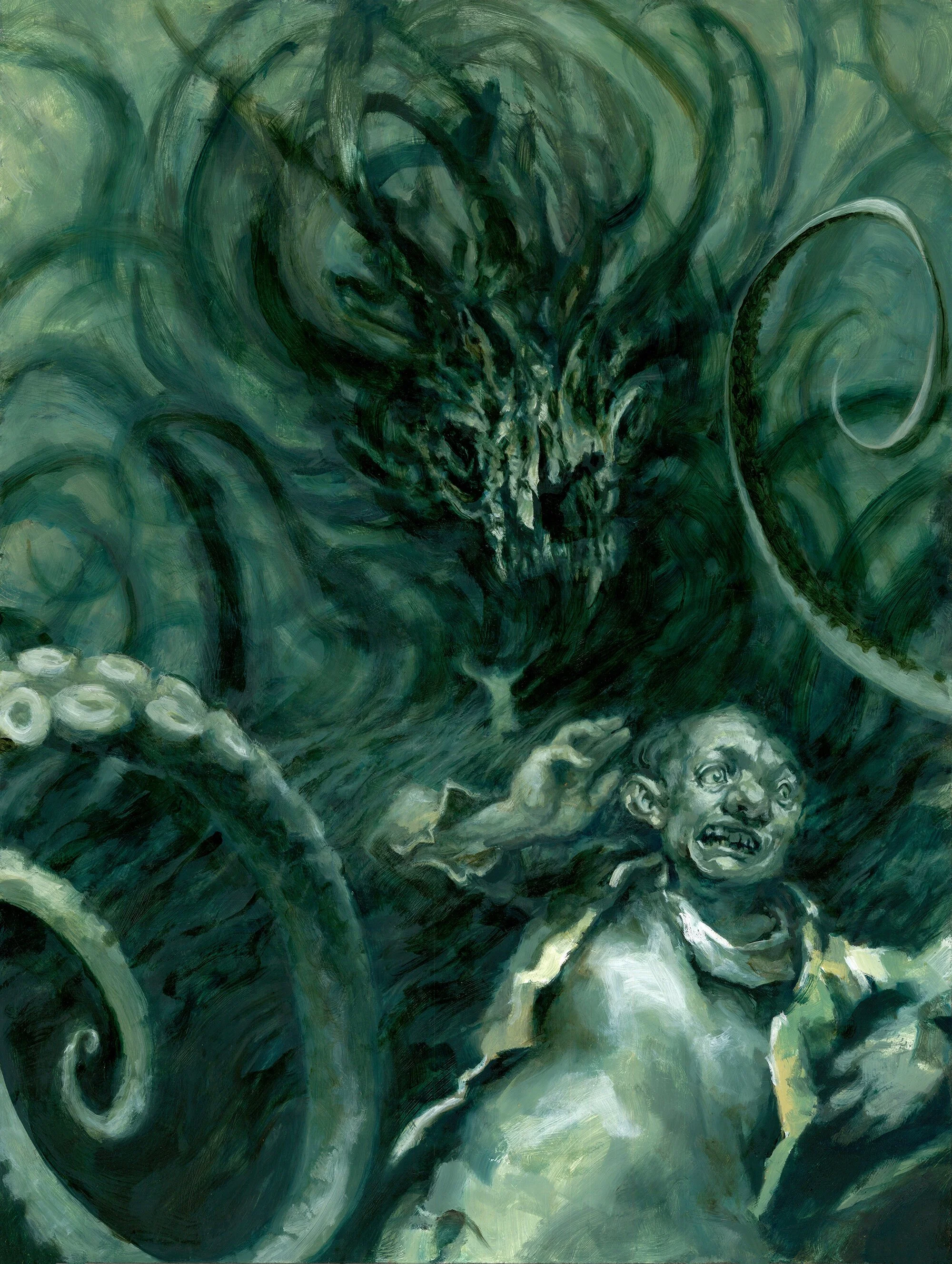
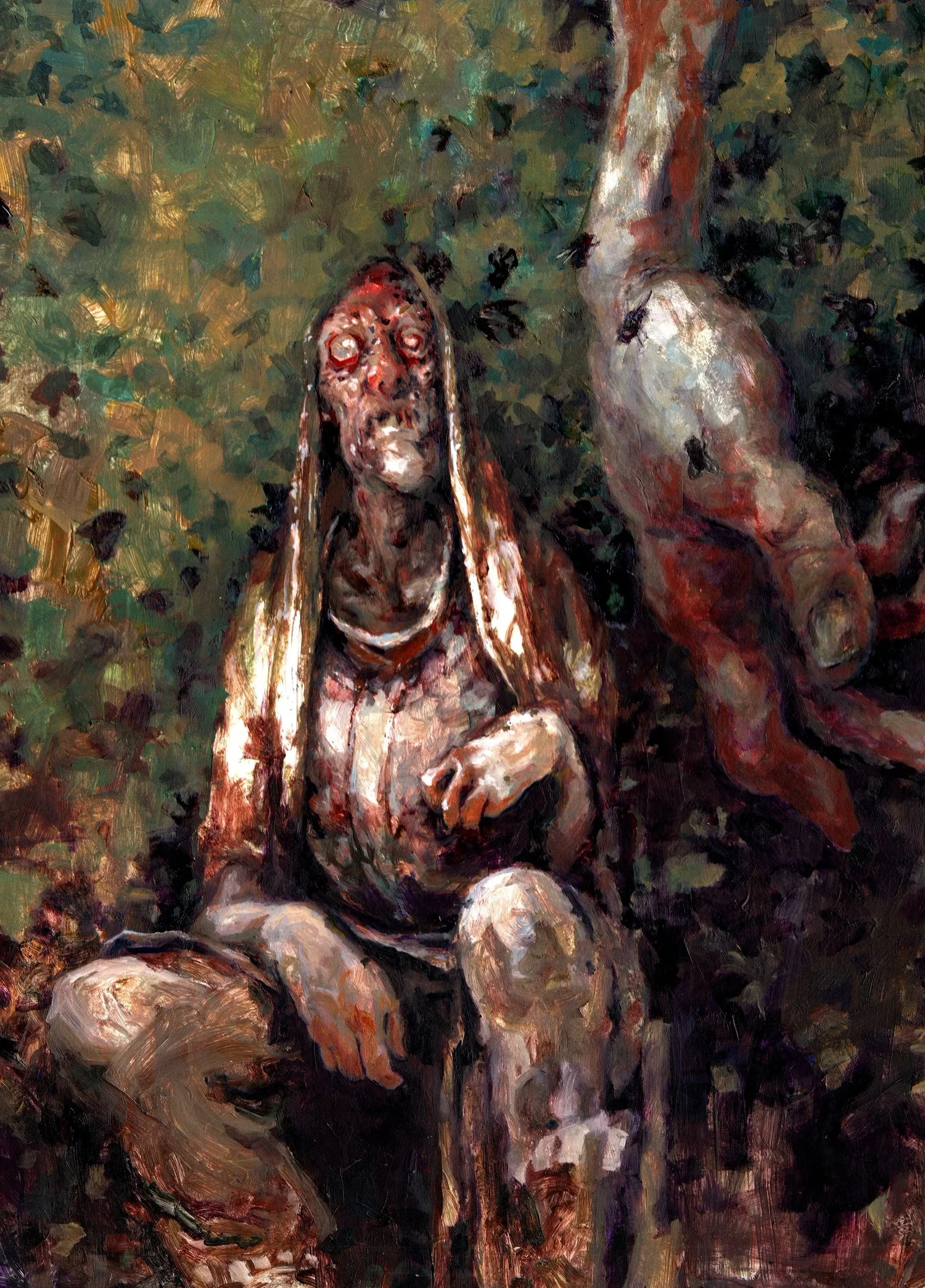
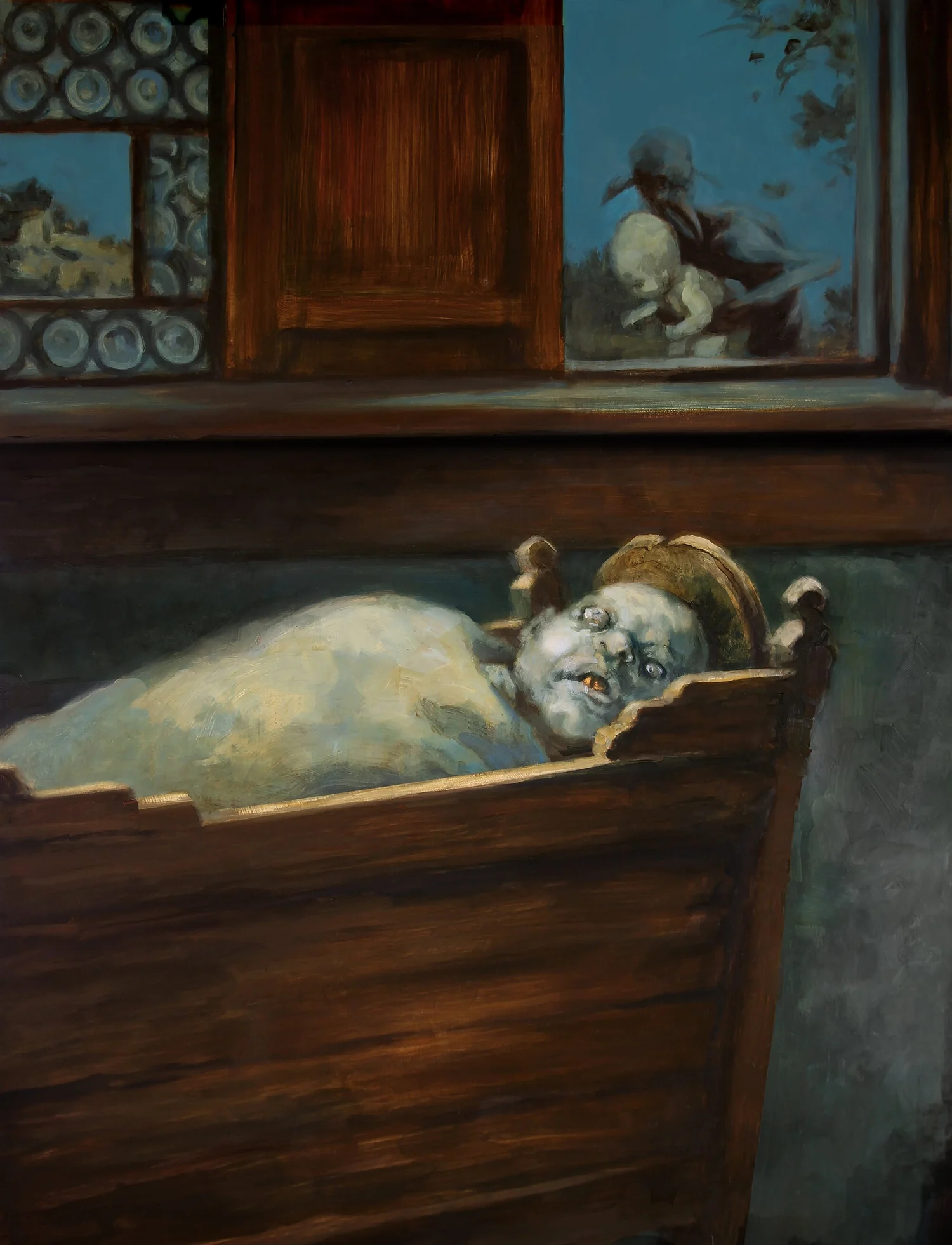
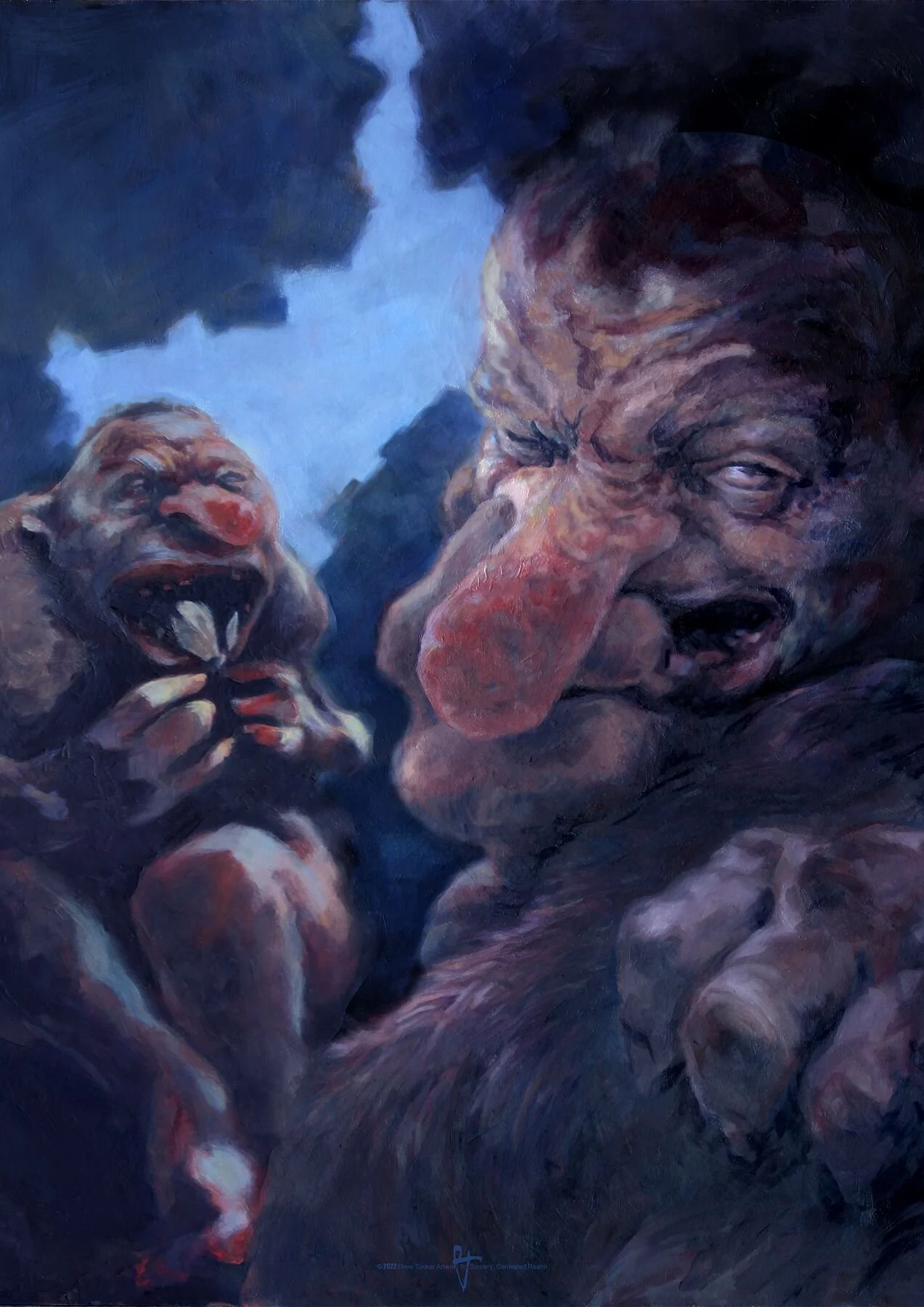
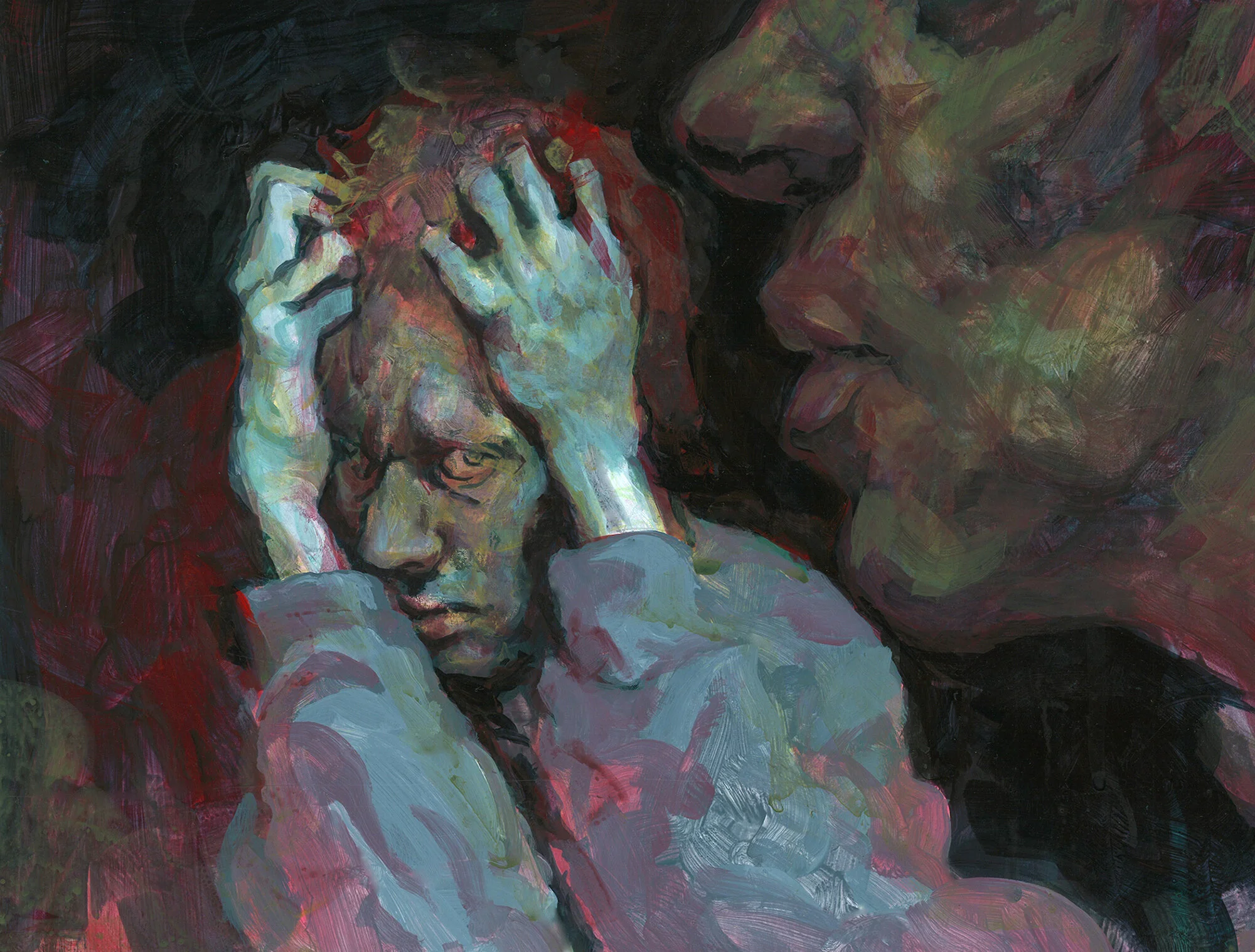
Bringing characters' emotions to life is central to Tucker’s work, but so is his handling of oils to carve out broad silhouettes and tonal masses. His approach stood in contrast to the hyper-realistic fantasy art that dominated the 1990s.
"This sounds a bit flaky, but it sometimes feels like you're channeling an idea," Tucker admits. "You still have to honor the art direction, of course, but then to some degree the paint will do things if you allow it. Especially with watercolor, which has a large, loose order. People think it's just chaos, but the paint has a voice. You can be hyper-realistic, or you can let it be expressive through the brushstrokes, shapes, and angles you put down."
His style isn't merely a preference but was influenced by mechanical limits. When Tucker began illustrating for Magic in 1993, the paintings had to be incredibly small: about 5 by 7 inches. The only thing Wizards of the Coast was equipped with was an 8x10 scanner, so artists had to fit their paintings on there.
“When you're designing for that scale, it's like designing a logo. You use basic shapes knowing it's going to shrink down. The shape has to hold up. I'm naturally very loose, but the composition is still there."
When asked if he ever paints purely for fun, Tucker insists there is no other way to work. For him, the boundary between assignment and personal expression doesn't exist.
"When I'm painting, even for an illustration, I'm kind of doing it for me," he explains. "I know some illustrators separate their work-for-hire from their personal stuff, but I think I'm always doing my own work. Why else would they call me to paint? They want how I solve a problem or how I conceptualise it. I always try to personalise it and pull myself into the feeling of the moment I'm trying to depict."
Even deeper personal history surfaces in pieces like Fey Changeling, depicting a mythic being stealing a human child. "I love that story because it appears in so many different cultures," Tucker points out. But he explains that the painting has a great meaning to him since he was adopted. "It was a running family joke: 'He's not one of us!'," he chuckles. "So that ties right into the folklore."
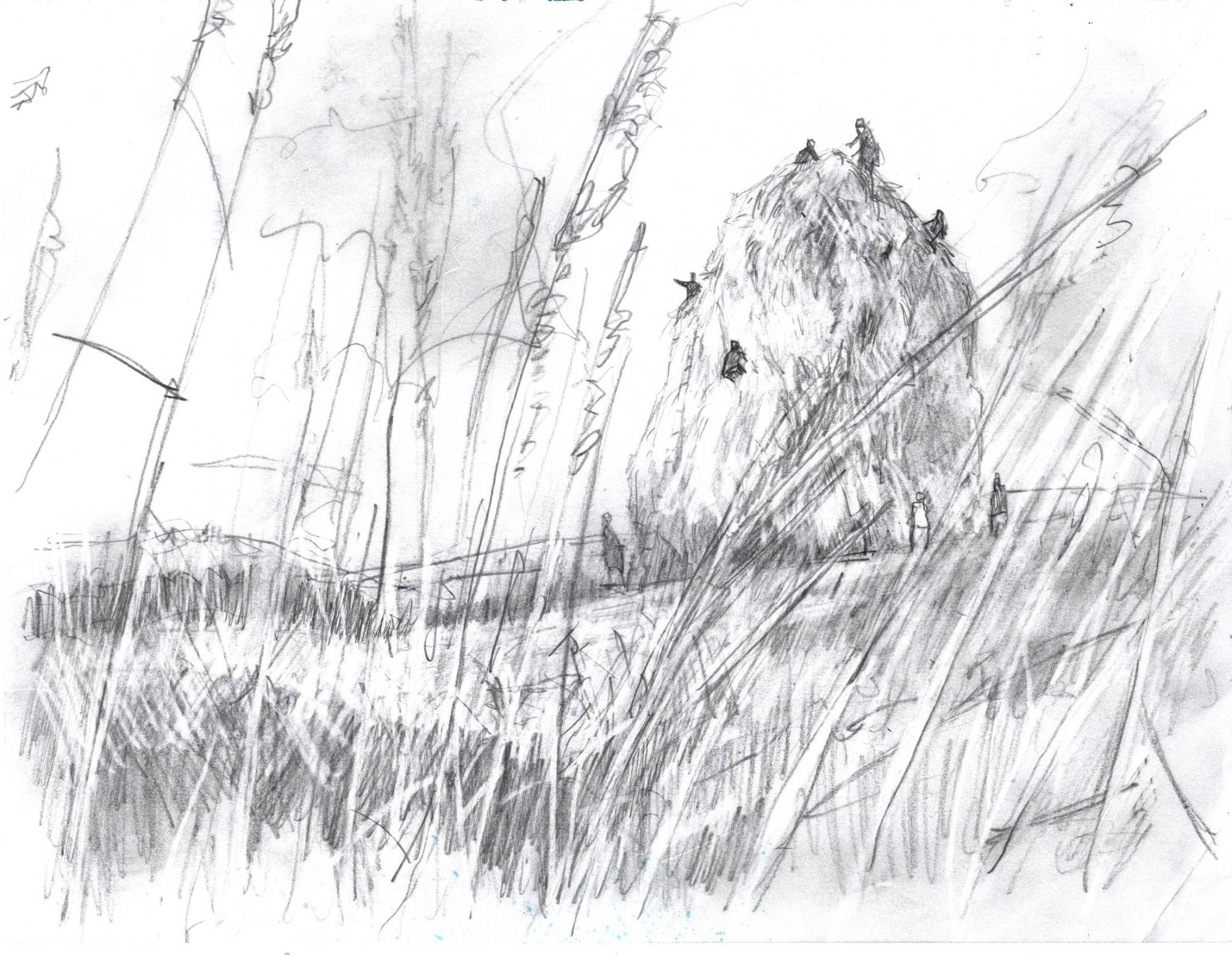
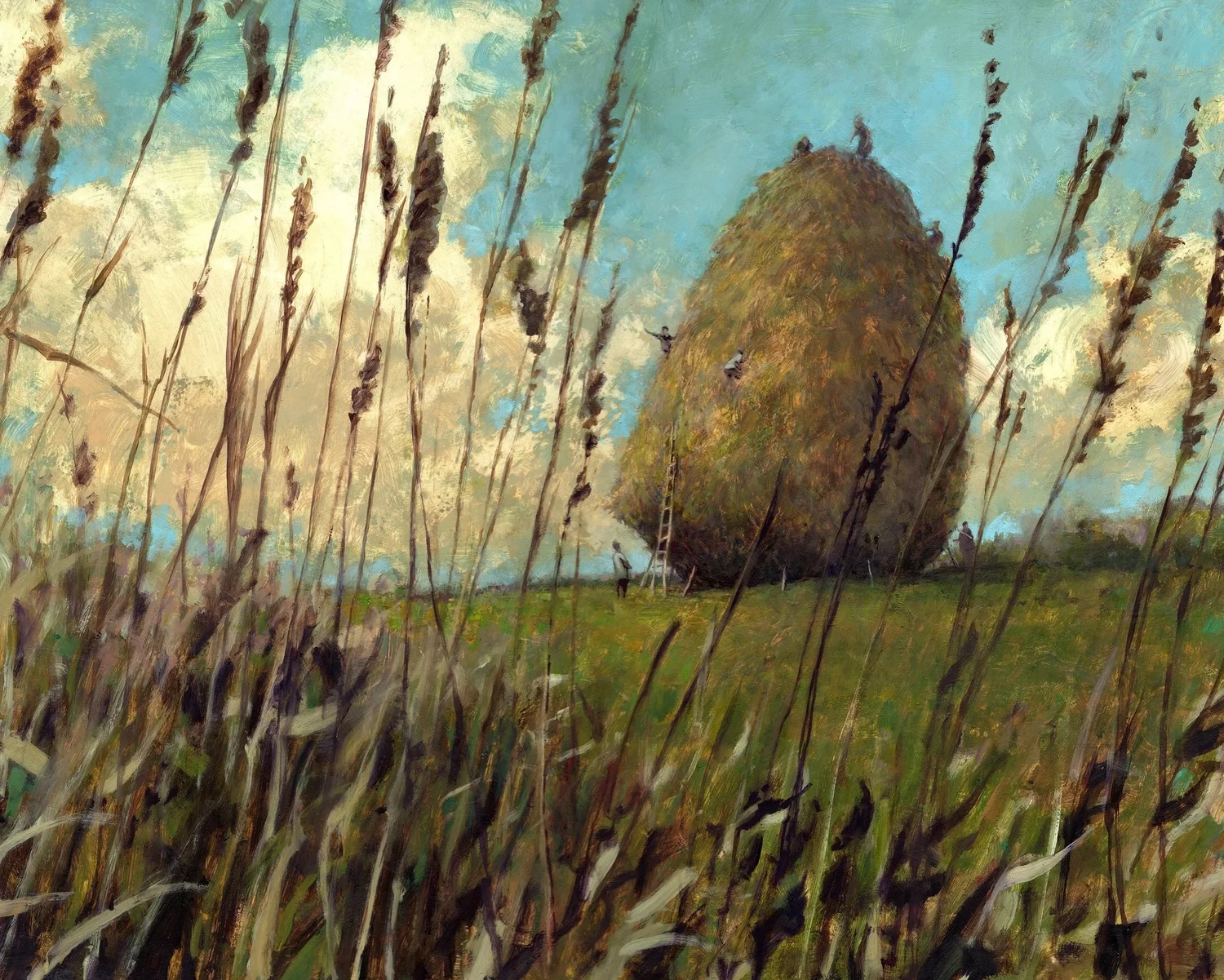
For the painting that gave this journal its name, Tucker explains this piece reflects a precious memory of his:
"For example, Haystack. My grandfather had a dairy farm where we spent a lot of time. When I didn't want to work, I'd hide in the hills behind the tall grass and watch everyone in the distance. That painting is kind of that moment," he explains.
"I try to leave enough room for the viewer to step into that moment as well, rather than just being a voyeur."
That distinction, between stepping inside an image and merely looking at it, cuts to the heart of Tucker's work. His paintings provide glimpses into his colourful life, from age-old family jokes and sentimental gifts to cherished memories and the bizarre, unglamorous photos stored on his phone.
The dispatch
Enjoyed this? Get the next one by email.
One letter, every season, with new interviews and the stories behind the paintings. No noise.
Keep reading
A year in a drawer
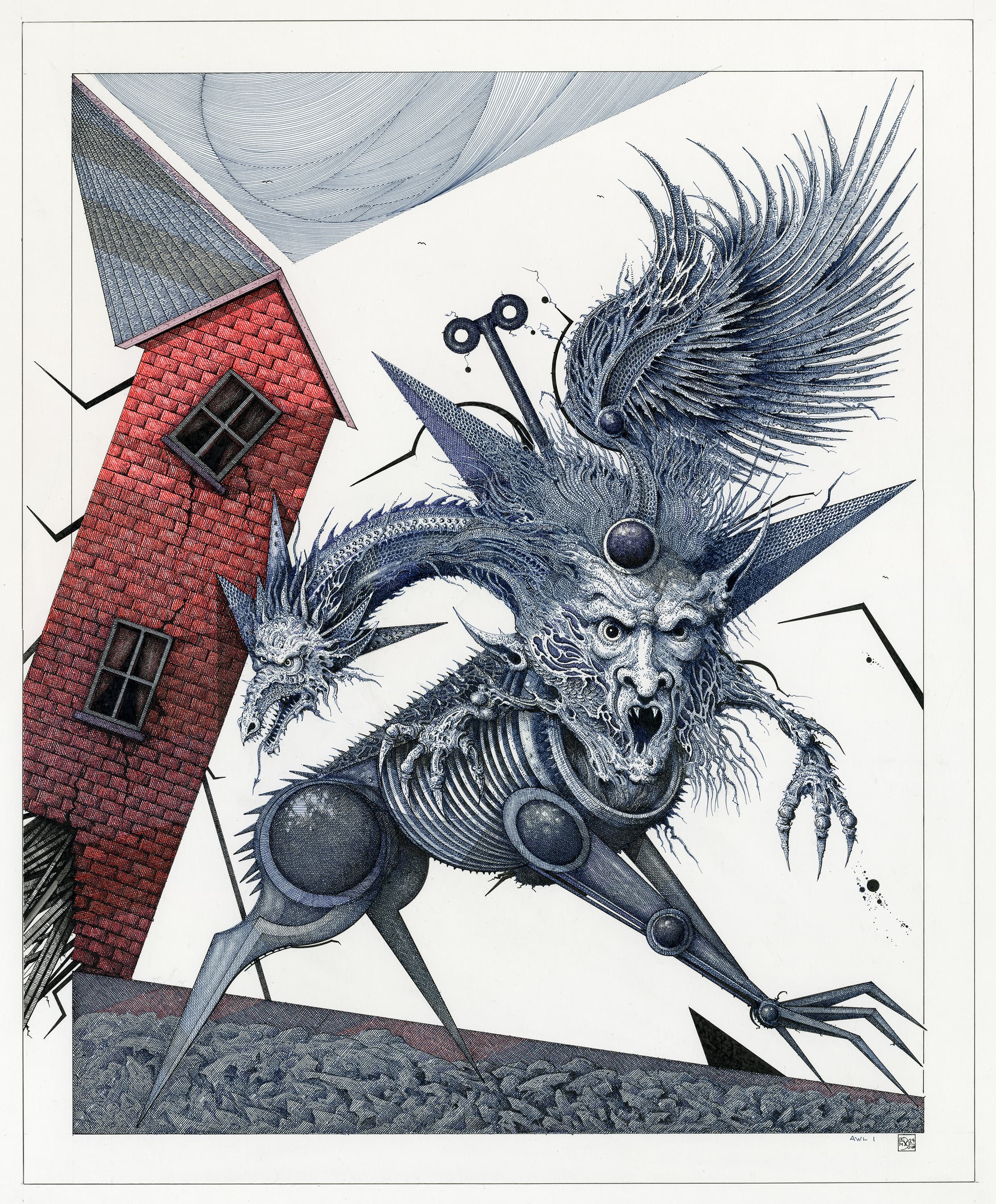
Ian Miller couldn't finish a dragon, so he put its head in a drawer for a year. Awl 1 is what came out.
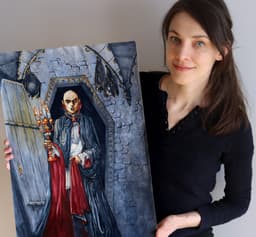
Elwira Pawlikowska: Architecting the Realm One Brushstroke at a Time
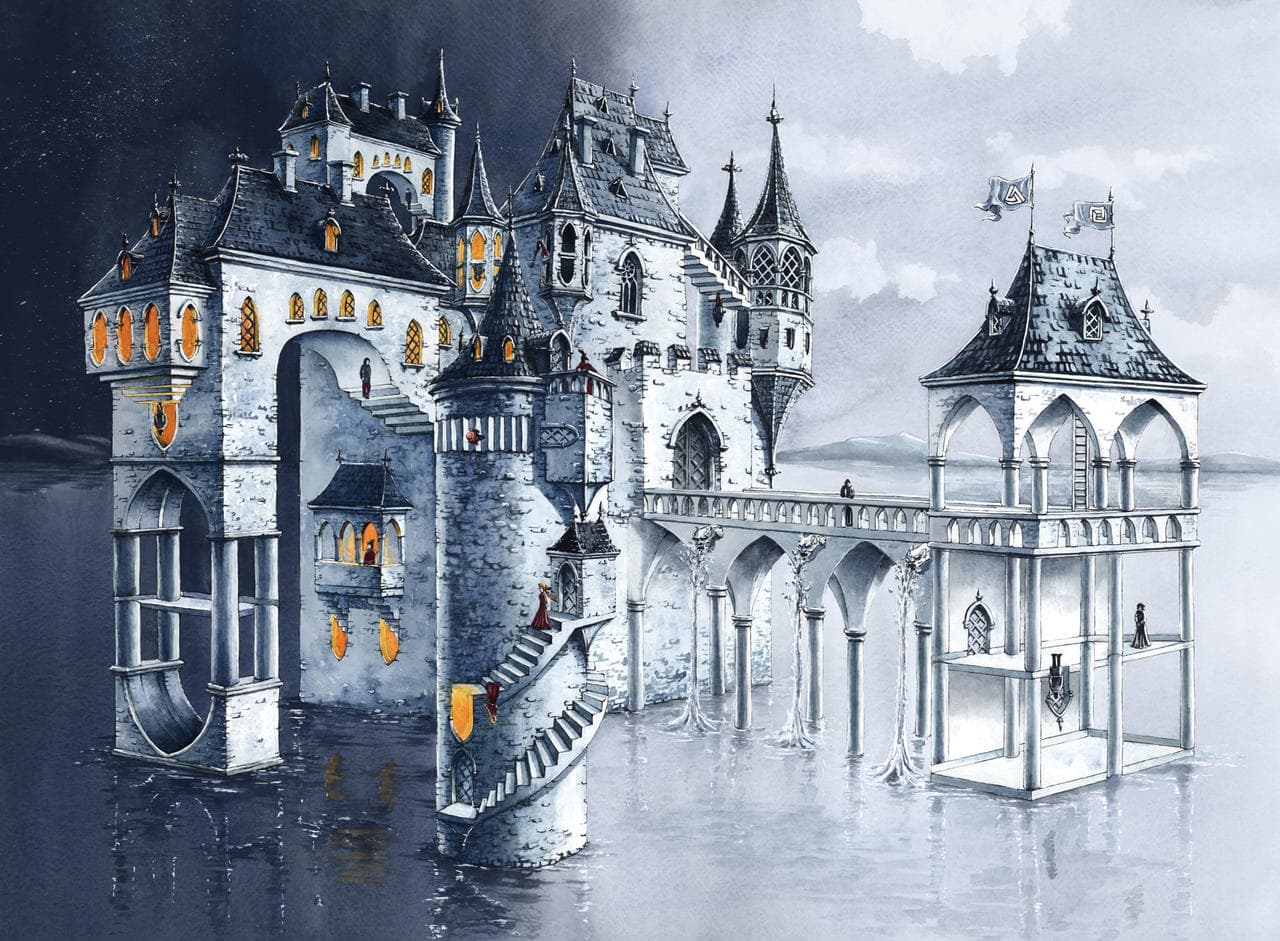
From architectural drafting to unforgiving watercolors, Elwira Pawlikowska is building the world of Sorcery one brushstroke at a time.